
Round Rock, TX · Garage Door Service
What "Built Before Insulation Rules" Means for Your Door in Round Rock
Most Round Rock homes date to 1978-2018, built before current door insulation rules. Here's what that means for comfort, spring wear, and replacement timing.
- Repairs & new doors
- Springs & openers
- Serving 4 nearby communities
The Common Mistake
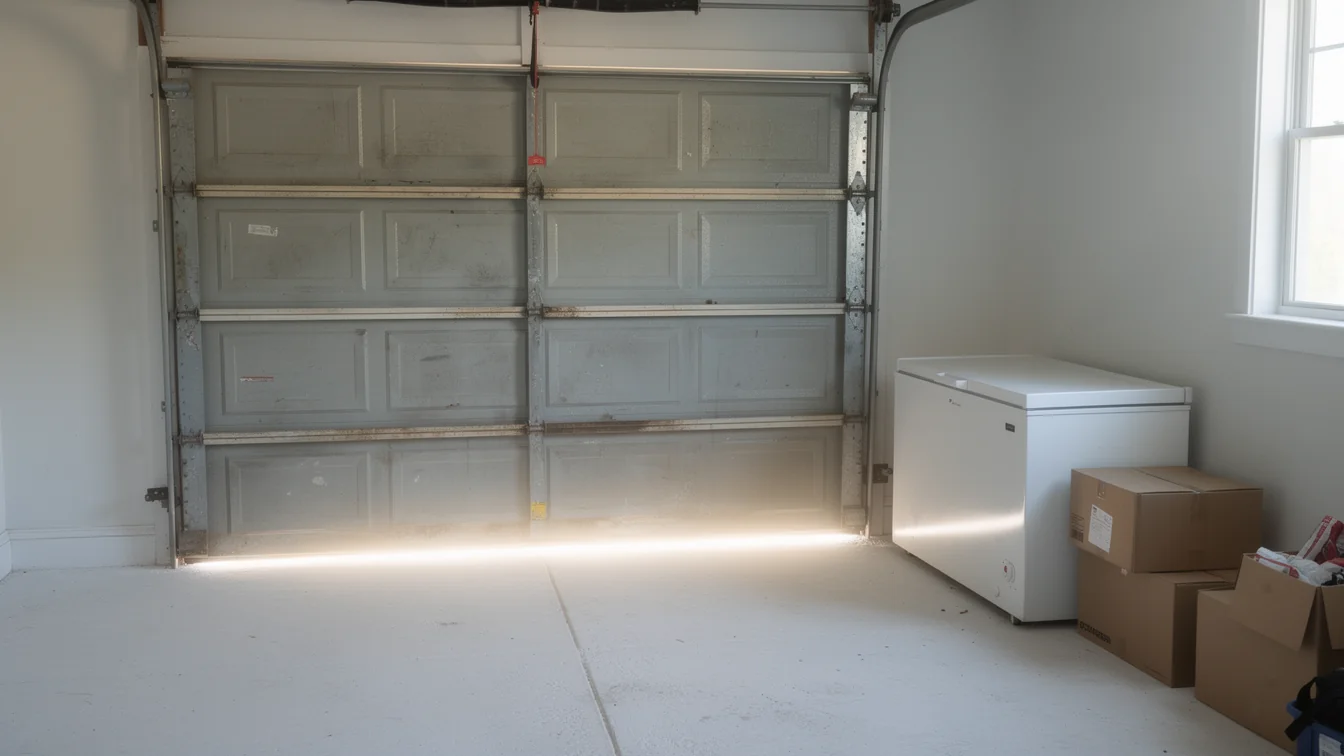
The mistake we see most is treating an old garage door like a cosmetic problem. Paint's faded, maybe a panel's dented, so the owner figures it's fine mechanically. Most houses in Round Rock's older neighborhoods went up between 1978 and 2018, with the bulk of that stock dating to the 1980s and 90s across the area's fourteen named communities. That build window matters because it falls before insulated steel doors were standard equipment. A lot of these original doors are single-layer steel over an air gap, no foam core, no thermal break at the frame. Owners call us about a noisy opener or a spring that snapped and never ask about the door skin itself, even though the skin is doing nothing to manage temperature or moisture. Swapping the opener or spring on a door like that fixes the symptom, not the underlying issue. If your house falls inside that 1978-2018 build range and the door is original, the door itself is the oldest, least-upgraded part of the garage - older than the opener, older than most of the hardware that's already been swapped once.
The Seasonal Bit
Round Rock sits in a mild climate with occasional freezes, not the hard winters that justify heavy insulation codes elsewhere. That's actually part of the problem with these older doors. Because the area never demanded thick insulated panels the way colder regions did, builders in the 80s and 90s put up basic steel doors and called it done. Then a few nights a year drop below freezing, and an uninsulated steel panel contracts fast while the frame and weatherstripping don't move at the same rate. That mismatch is what causes the gap at the bottom seal to open up, or a panel to bind slightly in the track on a cold morning. It's not dramatic damage, it's just enough stress, repeated over a few decades of freeze-thaw cycles, to loosen hardware and crack aging seals. Most of the year the door never notices the weather at all. It's those handful of cold snaps that find every weak point in a door that was never built to handle temperature swings in the first place.
How Local Conditions Play In
The service area has 35,683 owner-occupied houses out of 65,551 households, and a meaningful share of those are the same 1978-2018 stock we keep coming back to. A lot of the original doors on those builds are now pushing three to four decades old, which is beyond the expected service life of the springs, rollers, and hinges even if the door skin itself still looks presentable. Neighborhoods like Teravista, three miles north, and Brushy Creek, five miles out, fall inside that same build window, so this isn't a problem limited to one pocket of town. A median household income of $111,828 here means most owners can afford full replacement rather than patchwork insulation retrofits, and that's usually the more sensible call anyway once a door is that old. Retrofitting foam board to a 30-year-old steel door helps a little with temperature, but it doesn't touch worn rollers, stretched cables, or a spring rated for a lighter, uninsulated door.
The Situation
Here's the honest part: we don't stock replacement panels for every discontinued door style from the 1980s and 90s, and for a lot of these older builds, a single cracked panel means replacing the whole door rather than hunting down a matching section. That's a real limitation, not a sales pitch. If your door is original to a house built in that 1978-2018 window and it's just the opener acting up, we'll fix the opener. But if the spring just went and the door itself is original steel with no insulation, patching it usually isn't worth the money once you account for a new spring, new seals, and the labor to match them to old hardware. Full replacement with an insulated door costs more upfront but it's often the better math on a door this old, and it's a conversation we have honestly rather than push one way or the other.
Frequently asked questions
How do I know if my garage door is original to the house?
If your Round Rock home was built between 1978 and 2018 and the door has never been replaced, it's almost certainly a single-layer steel door without foam insulation, since that wasn't standard practice here at the time. Look for a thin door skin with no visible foam core when you tap the inside panel.
Does the occasional freeze around here actually hurt an old door?
On its own, one cold night won't damage much. But repeated over a couple decades, freeze-thaw cycles stress uninsulated steel panels and aging weatherstripping, which is why older doors in this area often show binding or seal gaps that show up specifically on cold mornings, not during the rest of the year.
Is it worth insulating my old door instead of replacing it?
Sometimes, but not always. A retrofit foam kit helps with temperature a little, but it doesn't fix worn rollers, stretched cables, or a spring sized for a lighter uninsulated door. On doors from the 1978-2018 build era, we usually find replacement makes more financial sense once hardware wear is factored in.
Why does my neighbor's newer house not have this problem?
Homes built later in the 1978-2018 range, or ones that already had a door replacement, are more likely to have insulated panels installed under more recent standards. Older stock from the 1980s and 90s surge is the group most likely to still carry an original, uninsulated door.
Related garage door services in Round Rock
More garage door guides
Book garage door service in Round Rock
Call now or request a quote - tell us what the door is doing and where you are.